The Racecam concept was developed by a group of Seven Network technicians led by Geoff Healey and successfully used for the first time during the 1979 race inside Peter Williamson’s Toyota Celica (below).
The transmission of live pictures and audio from a moving car was proudly promoted as a world first for the network. However, as sensational as it was to actually be able to watch footage from inside a competing car during the actual Great Race itself, it wasn't an Australian invention. The first such live in-car scenes had been broadcast in a NASCAR race in the States months before the 1979 Bathurst classic.
The Channel Seven system worked by relaying a live signal from inside the car via a helicopter circling overhead. The chopper bounced the signal back to the main OB van behind the pits. The initial technology required the installation of a large camera and recorder into the passenger seat space. Credit here should go to Seven’s Director of Sport, Mike Raymond, for convincing drivers that the extra weight wouldn’t make too much difference to the performance of the car - because it surely must have done in the case of a small, light four-cylinder machine like Willo's Celica.
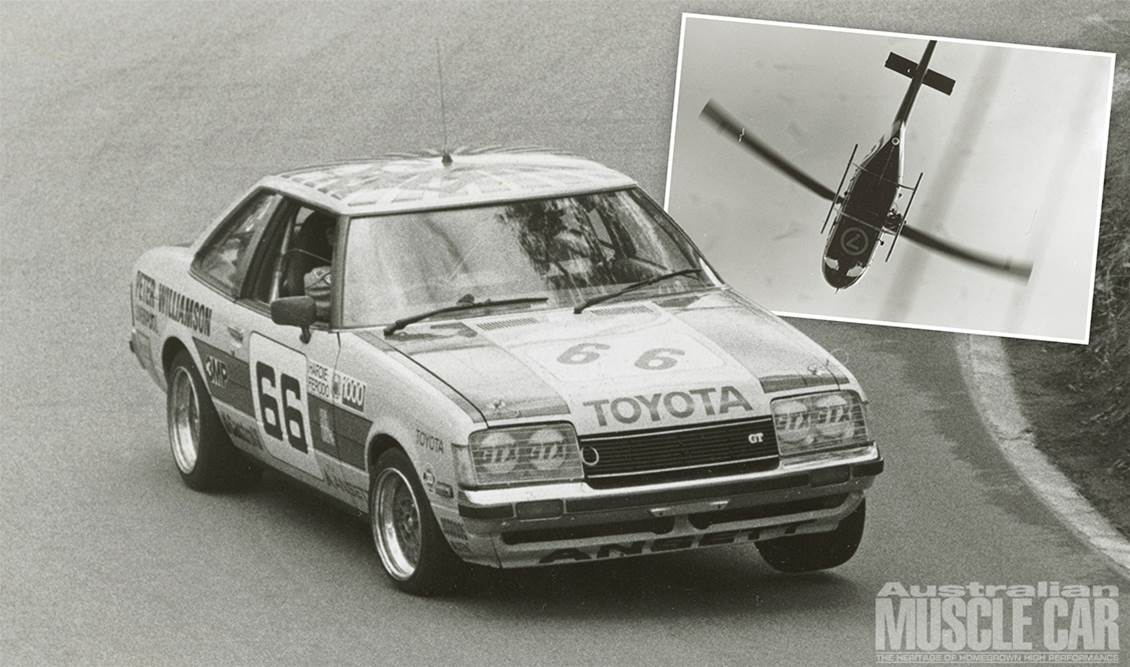
The other thing that Racecam did - at least in the early years - was introduce to the telecast in-car commentary from the drivers themselves. Willo had an interesting turn of phrase, but the master of this art was Dick Johnson. Dick was a natural and amazed everyone by being able to circulate at close to normal speeds while doing a (highly entertaining) running commentary, complete with jokes. The fact was that he did run a little slower when he was having a chat but didn’t seem to mind. Racecam made Johnson an even bigger star.
In later years the practice of drivers offering their in-race insights was quietly dropped, allowing Racecam carriers to concentrate on the one job at hand.


.jpg&q=70&h=226&w=176&c=1&s=1)